

In the wearable electronics market, display performance has become a core differentiator. As smartwatches, fitness trackers, and health-monitoring devices increasingly adopt circular TFT LCD designs, selecting the ideal resolution for a round TFT LCD display is no longer a purely technical choice—it is a strategic product decision.
This article analyzes resolution selection from an engineering, user experience, and commercial perspective, helping brands and OEMs identify the optimal resolution strategy for wearable devices powered by New Display.
1️⃣ Why Resolution Matters for Circular TFT LCD in Wearables
Unlike rectangular displays, a round TFT screen presents unique challenges:
- Limited active display area
- UI elements constrained by circular geometry
- Higher visibility of pixel density at short viewing distances
In wearable scenarios, resolution directly impacts:
- Visual clarity and UI smoothness
- Power consumption and battery life
- SoC performance and system cost
A well-matched resolution ensures the round LCD display module delivers premium visual performance without overengineering the system.
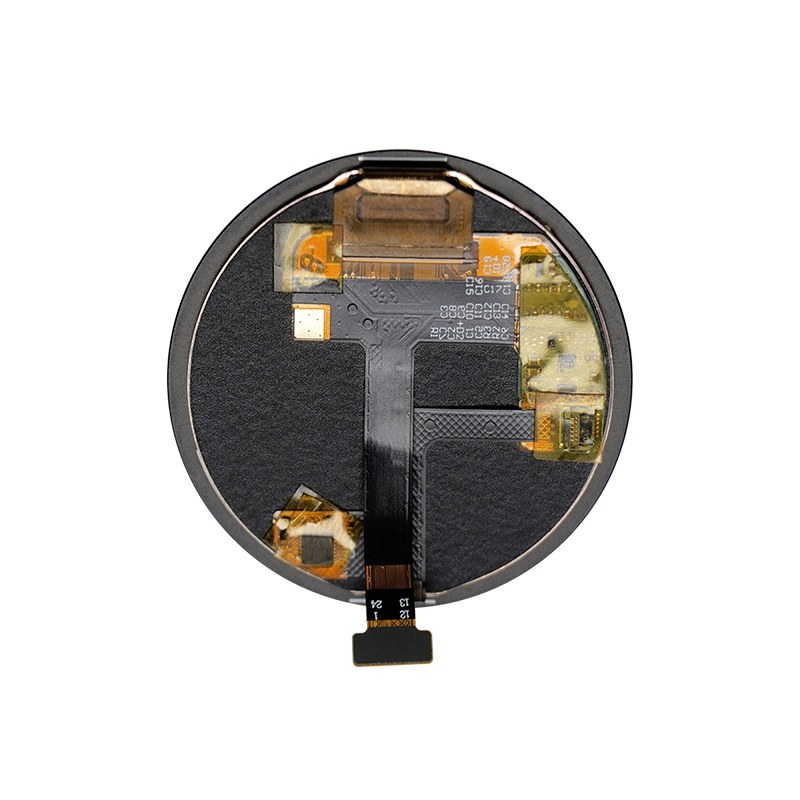
2️⃣ Common Resolutions Used in Round TFT LCD Displays
Below are industry-proven resolution ranges widely adopted in wearable-grade circular TFT LCD products:
| Display Size | Common Resolution | Typical Application |
|---|---|---|
| 1.28 inch | 240 × 240 | Fitness trackers, entry-level smartwatches |
| 1.39 inch | 360 × 360 | Mid-range smartwatches |
| 1.54 inch | 454 × 454 | High-end wearables, medical devices |
| ≥1.6 inch | 480 × 480 | Premium smart devices, HMI wearables |
From a commercial standpoint, 240×240 and 360×360 remain the most cost-effective and supply-chain-stable options.
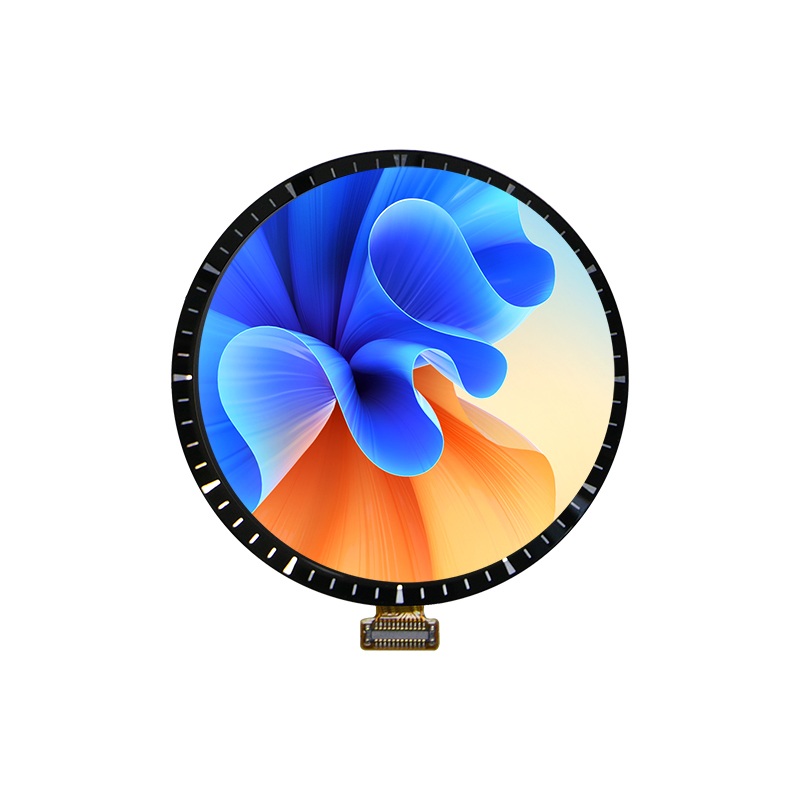
3️⃣ Pixel Density: The Real Metric Behind Resolution
Resolution alone does not define visual quality. Pixel density (PPI) is the critical indicator for a round TFT LCD display viewed at close range.
Recommended PPI for wearables:
- 200–250 PPI: Acceptable for basic UI
- 250–300 PPI: Optimal balance of clarity and efficiency
- 300+ PPI: Premium experience, higher system cost
For most wearable applications, 250–300 PPI delivers sharp text and icons without excessive power draw.
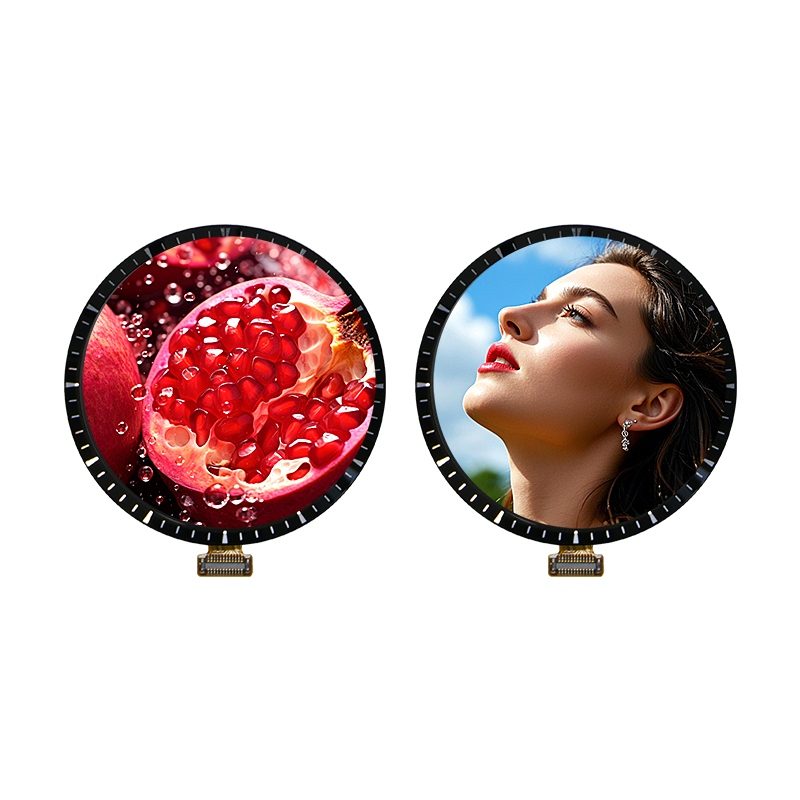
4️⃣ Resolution vs Power Consumption Trade-Off ⚡
Higher resolution increases:
- Frame buffer size
- Data transmission bandwidth
- GPU and memory load
This has a direct impact on battery performance—one of the most critical KPIs in wearable devices.
Strategic recommendation:
- Entry & mass-market wearables → prioritize efficiency
- Premium or medical wearables → prioritize clarity and precision
New Display optimizes its round TFT screen solutions to balance resolution and power efficiency, ensuring long battery life without compromising display quality.
5️⃣ UI Design Considerations for Circular Displays 🎨
A circular TFT LCD does not benefit from ultra-high resolution if the UI is not optimized accordingly.
Key UI alignment principles:
- Radial layouts instead of grid-based design
- Larger font sizes for edge readability
- High-contrast color schemes
A properly designed UI can make a 240×240 round LCD display module feel more refined than a poorly optimized higher-resolution screen.
6️⃣ How New Display Approaches Resolution Optimization
As a professional round TFT LCD display supplier, New Display adopts an application-driven resolution strategy:
- Matching resolution to display size and viewing distance
- Supporting SPI, MCU, RGB, and MIPI interfaces
- Offering customization for bezel size and active area
- Ensuring long-term supply stability for wearable OEMs
This approach reduces development risk while improving time-to-market.
✅ Conclusion: What Is the Ideal Resolution?
There is no one-size-fits-all answer. The ideal resolution for a circular TFT LCD in wearable devices depends on:
- Display size
- Target user experience
- Power and cost constraints
- UI and application complexity
By selecting the right round TFT LCD display resolution and partnering with experienced manufacturers like New Display, brands can achieve both technical excellence and commercial competitiveness.


Leave a reply