

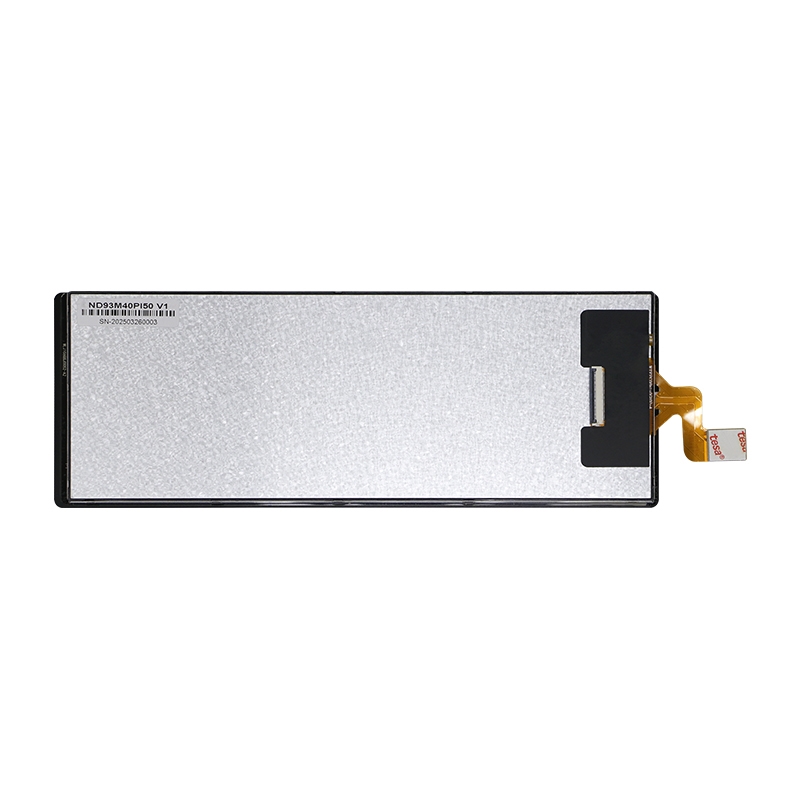
In modern display systems, viewing angle is a critical factor that directly affects user experience, especially in industrial and embedded applications. A handheld bar LCD module is often used in environments where information must remain visible from multiple positions and lighting conditions. Therefore, optimizing viewing angle becomes essential to ensure consistent readability and color accuracy. For advanced solutions like the 9.3-inch bar LCD module from New Display, wide-angle performance is not only a design goal but also a technical requirement for industrial, automotive, and IoT systems.
Wide-View Panel Technology
To begin with, the foundation of viewing angle optimization lies in the LCD cell structure. A handheld bar LCD module typically uses advanced wide-view technologies such as IPS (In-Plane Switching) or similar alignment structures. As a result, liquid crystals rotate more uniformly when voltage is applied. Consequently, light transmission remains stable even when the viewing position shifts. Moreover, this ensures that brightness and contrast do not degrade significantly at extreme angles. In addition, the 9.3-inch 600×1600 high-resolution bar display from New Display benefits from optimized pixel alignment, which further enhances visual consistency across the entire ultra-wide screen.
Backlight and Optical Film Enhancement
Furthermore, viewing angle is not only determined by the LCD layer but also by the optical system. A handheld bar LCD module uses carefully engineered backlight units combined with diffusion and enhancement films. These optical films distribute light evenly across the display surface. At the same time, prism and compensation films help reduce brightness drop-off at oblique angles. Therefore, users can maintain clear visibility whether viewing from the front or side. Additionally, high-brightness backlighting ensures that the image remains readable even in outdoor or high-ambient-light environments.
MIPI Interface and Signal Stability
Another important factor is signal stability. The New Display 9.3-inch bar LCD module uses a MIPI high-speed serial interface, which ensures fast and stable data transmission. Because of this, a handheld bar LCD module can maintain consistent image rendering without flickering or distortion. Moreover, stable signal delivery supports precise grayscale and color reproduction, which indirectly improves perceived viewing quality from different angles.
Industrial Design for Consistent Optical Performance
In addition, mechanical structure also plays a role in viewing optimization. The narrow and elongated design of a handheld bar LCD module reduces edge distortion, especially in space-constrained environments such as automotive dashboards or medical monitoring systems. Meanwhile, New Display engineers carefully calibrate the panel’s optical axis to ensure that brightness uniformity remains stable across the full 178-degree viewing range. As a result, visual information remains reliable even in dynamic working conditions.
Multi-Layer Information Display Advantage
Because bar LCD modules are often used for dense information display, viewing angle optimization becomes even more important. For example, in industrial instruments, multiple data layers must be visible simultaneously. Therefore, a handheld bar LCD module is designed to maintain contrast consistency across all regions of the screen. Moreover, this ensures that users can quickly interpret critical data without repositioning the device.
Application Scenarios and Real-World Value
The 9.3-inch 600×1600 bar LCD module is widely used in automotive dashboards, medical monitoring systems, digital signage, and industrial control terminals. In these environments, users may not always view the screen directly from the center. Therefore, optimized viewing angles ensure reliable readability under different installation positions. In addition, this improves operational safety and efficiency.
Conclusion: Engineering Better Visibility
In summary, optimizing viewing angle in a handheld bar LCD module requires a combination of advanced LCD technology, optical film engineering, stable MIPI signal transmission, and precise structural design. With solutions from New Display, the 9.3-inch bar LCD module achieves wide-angle performance, high resolution, and stable brightness. Consequently, it delivers a reliable visual experience for demanding industrial and embedded applications where clarity and consistency are essential.




Leave a reply